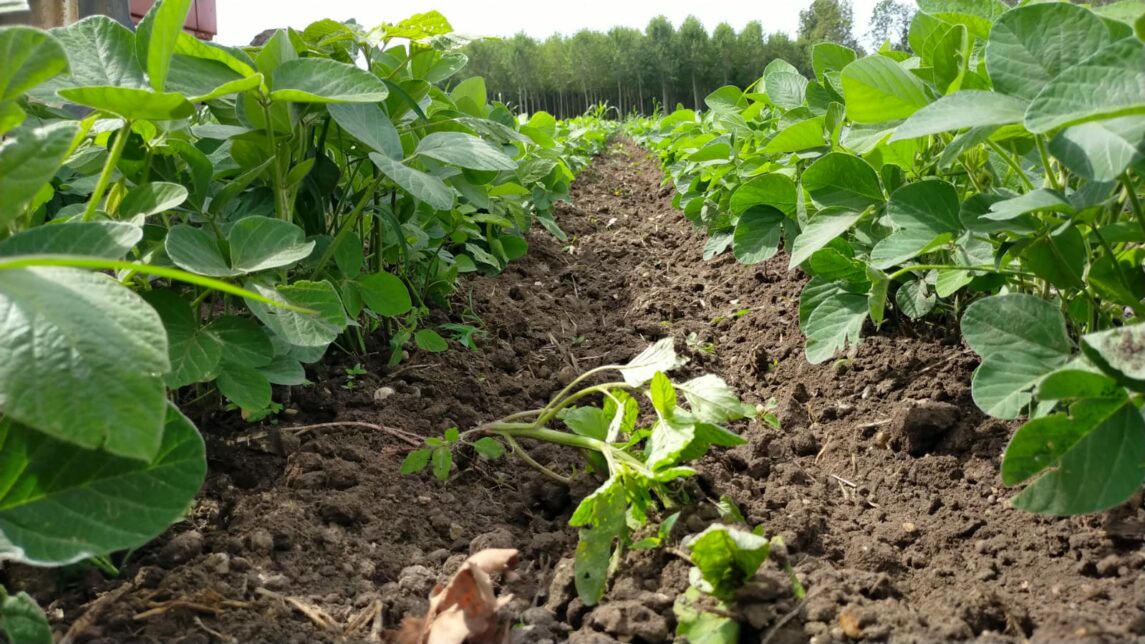
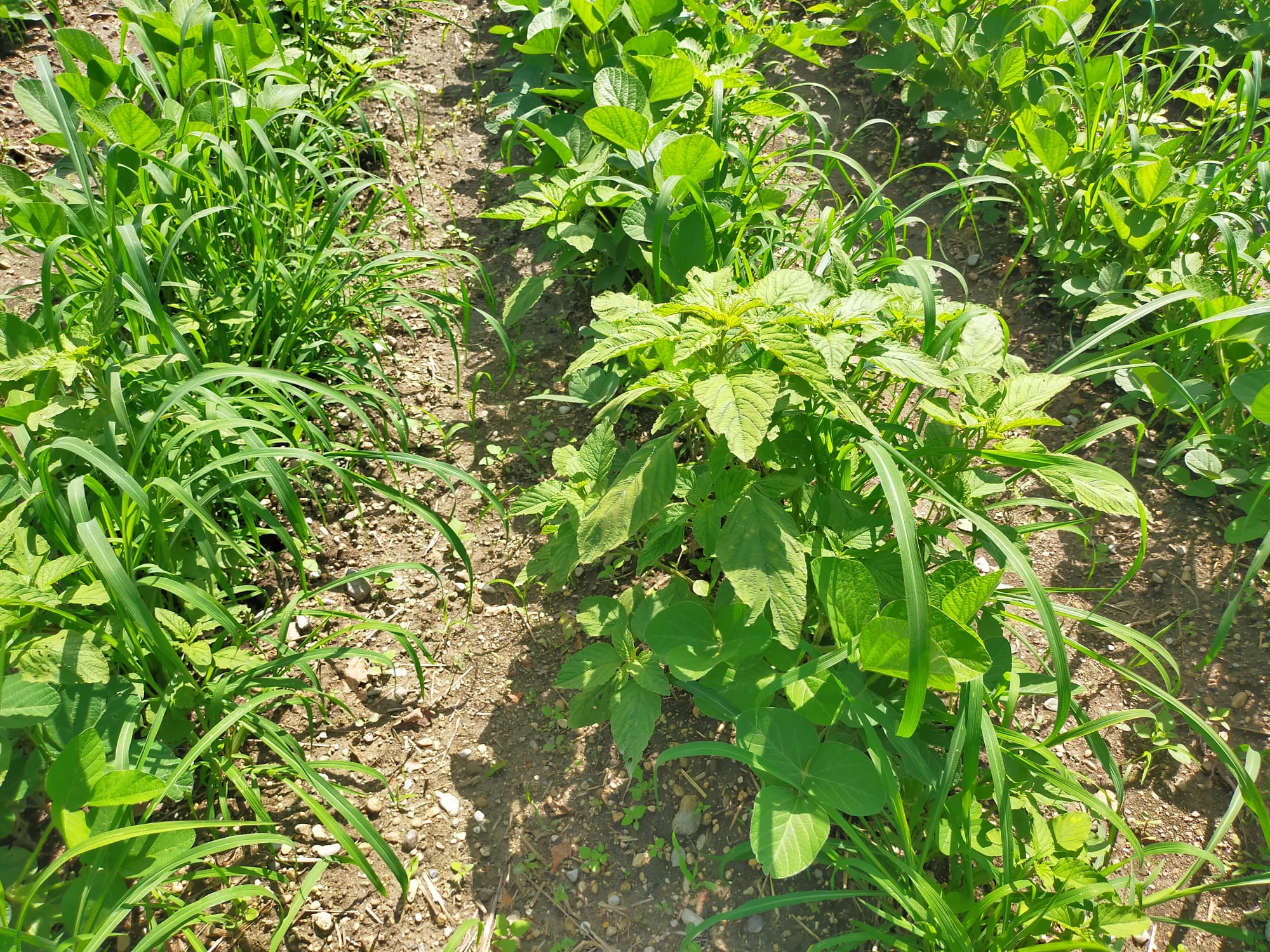
This year has brought unexpected challenges for many farmers: a weed infestation more persistent and resistant than in previous years. Purslane, amaranth, wild mustard, couch grass — species that in the past were controllable with standard treatments, now resisting herbicides and multiplying rapidly. You are not alone in this battle: the farming world is evolving, and effective mechanical solutions exist to save the harvest even in difficult situations.
Why Have Weeds Become More Resistant?
Herbicide resistance is a growing phenomenon globally. The main causes:
- Repeated use of the same active ingredient: selects resistant plants and favours them over sensitive ones, year after year
- Natural genetic mutations: some weeds develop detoxification or herbicide-exclusion mechanisms
- Anomalous weather conditions: warm, wet springs advance weed germination, often before the crop is developed enough to compete
- Reduced crop rotation: monoculture favours weeds specialised to that specific crop
The result is that in many horticultural farms chemical weeding no longer works as well as before — and costs rise without the results of the past.
Mechanical Weeding: the Structural Solution
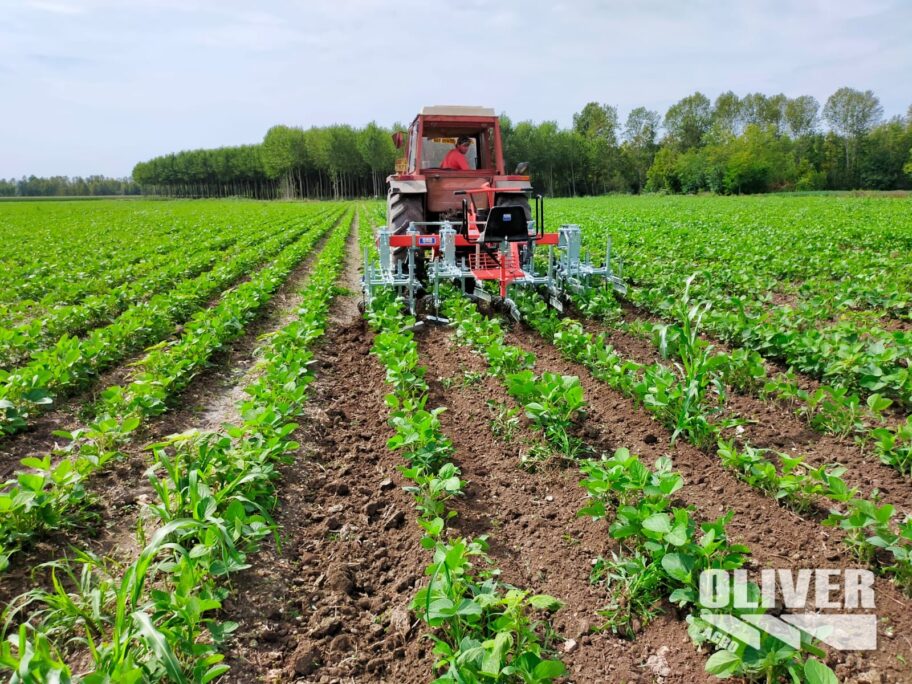
Mechanical weeding creates no resistance. Inter-row weeders cut, incorporate or uproot weeds physically — a mechanism to which no plant can genetically adapt. This is why mechanical weeding with Oliver Agro inter-row weeders is today the most robust response to resistant infestations, even in the most difficult situations.
Which Oliver Agro Machine to Save the Harvest?
The choice depends on the crop and the stage of development of the infestation:
- Rotobrush — weeds at cotyledon stage or on stony soils: motorised brushes eliminate seedlings without touching the crop. Ideal as an urgent first intervention on delicate crops (carrot, onion, lettuce). Works also where rigid weeders cannot.
- Rotosark — infestations on maize, soya, sunflower, wide-row vegetables: Rotoblizz rotors + hardened flat hoe cut deep without ridging. Suitable even with well-developed weeds.
- Colibrì — drilled narrow-row crops (carrot, onion, lettuce): works within millimetres of the row, absolute precision even in intense infestation situations.
- Optyma 2.0 — head-forming crops (lettuce, cabbage, radicchio) with weeds also in the inter-plant space: camera AI guidance reaches up to 90% of the inter-plant area, where no other weeder and no selective herbicide can reach.
- Rotovert — garlic, onion, leeks, shallots on very narrow rows: intervenes where other tools cannot enter.
What to Do Immediately: Emergency Intervention
- Intervene before flowering: purslane and amaranth produce thousands of seeds per plant — every day of delay increases the problem for coming years
- Choose the right machine for your crop: a poorly calibrated intervention can damage the crop more than the weeds themselves
- Work with dry soil surface: cut weeds dry out faster and do not re-root
- Plan a second pass: after 10–15 days, to eliminate weeds that germinated after the first intervention
Frequently Asked Questions on Unexpected Weed Infestations
Can herbicide-resistant weeds be eliminated mechanically?
Yes. Mechanical weeding does not depend on chemical active ingredients — it cuts or incorporates weeds physically, regardless of any genetic resistance. Purslane, amaranth, couch grass and other problem species have no “mechanical resistance”.
Is it too late to intervene if weeds are already large?
It is never too late to stop seed production. The most urgent intervention is always before flowering. The Rotosark, with its Rotoblizz rotors, can work even with well-developed weeds. Contact Oliver Agro to assess the specific situation.
Does mechanical weeding work on perennial weeds like couch grass?
Mechanical weeding is very effective on annual weeds. On couch grass and other perennials with deep root systems, repeated hoeing progressively weakens the plant by exhausting its reserves. More frequent passes give better results.
Which weeder to use as urgent first intervention on a delicate crop?
The Rotobrush is the safest choice for urgent first intervention on early-stage crops: motorised brushes eliminate weeds without risk of damage to seedlings, even in variable soil conditions.
How to prevent unexpected infestations in future seasons?
The most effective strategy is the false seedbed: prepare the seedbed, wait 10–15 days for weeds to germinate, then eliminate them mechanically with the Rotobrush before sowing. This drastically reduces weed pressure from the very start of the season.
Don’t let an unexpected infestation compromise your harvest. Oliver Agro has the right machine for every crop and every situation. Contact us now for advice, or browse by crop to find the right weeder for your situation.